
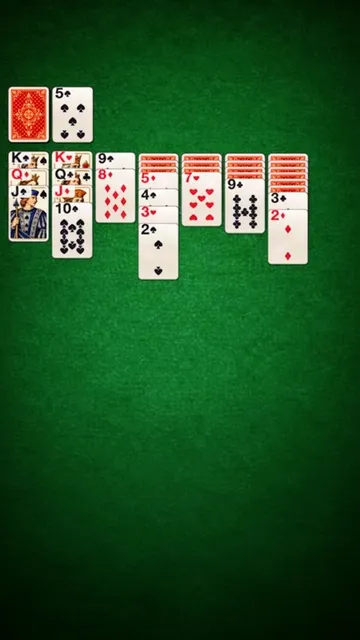



Klondike: the classic
Klondike deals seven tableau columns and asks you to build four foundations from ace to king. You can draw one card or three from the stock, tap to auto-move, drag stacks, undo without limit and ask for hints. Deals are checked by a solver so every one can be won, and there is a daily challenge if you like a shared deal.
Spider: long suited runs
Spider Solitaire uses two decks across ten columns. Any card can sit on a card one rank higher, but only a run in a single suit moves together, and a complete king-to-ace run in one suit leaves the table. Choose one suit for a relaxed game, two for a real challenge, or four when you want to plan several moves ahead.
Mahjong solitaire: tiles instead of cards
Tile Pairs and Tile Tango are tile-matching solitaires. A tile is free when nothing sits on it and one side is open; tap two identical free tiles to remove them. Tile Pairs has six boards that are always dealt so they can be cleared, while Tile Tango offers sixty layouts with hints, undo and a limited shuffle.
When you get stuck
Undo is part of solitaire strategy, not cheating: back up to the point where you chose between two moves and try the other line. In Spider, keep an empty column for as long as you can; in Klondike, turn over face-down cards before shuffling cards between columns; in tile games, clear tiles that release the most other tiles.
Questions about solitaire games
Which solitaire game is the hardest here?
Spider with four suits asks for the most planning, because mixed-suit stacks cannot move as a group. Klondike and the tile games are friendlier starting points.
Is mahjong solitaire the same as mahjong?
No. Mahjong is a game for four players. Mahjong solitaire uses the same tile designs for a one-player matching puzzle.
Further reading
Spotted something out of date? Report a correction